CASE STUDIES
COMMUNICATION DESIGN
Designing a Zero-to-One DEI Content System
Defined the information architecture and content model for a public-facing DEI experience using fragmented executive and HR inputs.
MY ROLE
Content Strategist & UX Writer
TIMELINE
Jan. 2024- Mar. 2024
AUDIENCE
Clients, Prospects, Employees, Candidates
DELIVERABLES
Content Strategy, IA, UX Writing, Content Model
OUTCOME
Created a scalable DEI content framework for external audiences
OVERVIEW
I designed and authored an enterprise Diversity, Equity, and Inclusion (DEI) webpage for the Amundi US retail website, synthesizing unstructured source material from HR teams, executive leadership, public speeches, and internal communications into a single, structured content experience for external audiences.
With no existing webpage or established content model, I defined the information architecture, structured the narrative flow, and translated complex organizational messaging into clear, accessible web content. Content was developed within an established enterprise design system using approved typography, color standards, and page templates to ensure brand consistency and compliance across the site.
CHALLENGES
Balancing complex DEI content with the need for a clear, structured experience
Consolidating content from multiple stakeholders into a cohesive narrative
Avoiding generic or overly broad messaging often associated with DEI content
Aligning executive, HR, and recruitment messaging into a unified experience
PROCESS
Partnered with executive sponsors and HR stakeholders to understand the organization's DEI vision, priorities, and key program components.
Analyzed source materials, presentations, and stakeholder input to identify themes, content requirements, and opportunities to simplify complex information.
Defined the information architecture and content model, organizing initiatives into a clear framework that users could quickly understand and navigate.
Developed the page structure, content hierarchy, and messaging framework for communicating DEI commitments, programs, and goals.
Collaborated with design and web teams to translate the content strategy into a user-friendly digital experience that supported engagement and future program growth.
BEFORE
No centralized DEI webpage
Messaging scattered across HR, leadership, and internal comms
No defined structure or narrative hierarchy
AFTER
Single structured DEI content system
Clear structure separating company commitments, DEI initiatives, and supporting leadership and accountability content
Unified, externally-facing narrative aligned across stakeholders
INFORMATION ARCHITECTURE
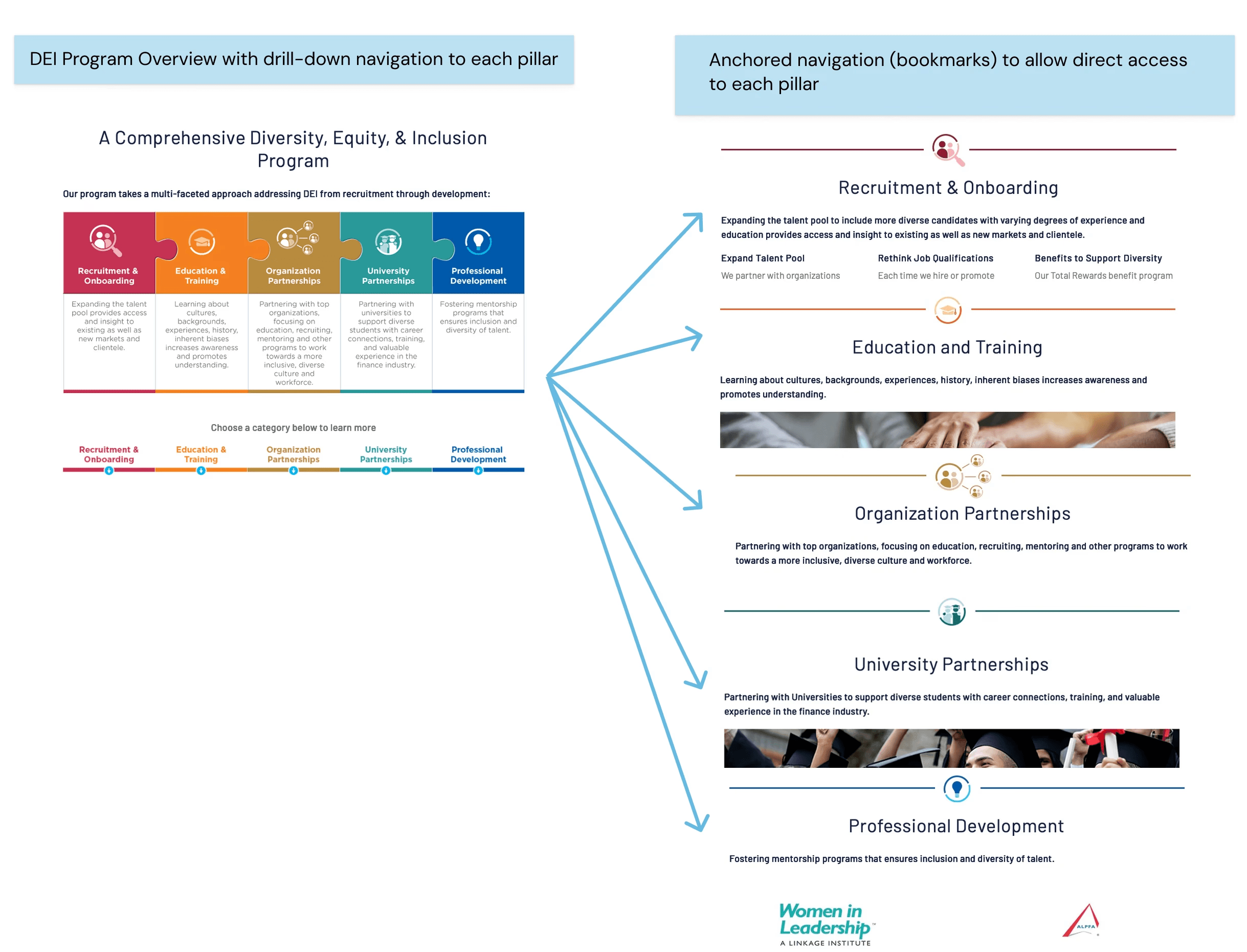
I defined a structured content hierarchy to separate high-level commitments from supporting detail, allowing users to scan key themes before diving deeper using the anchored navigation for direct access.

KEY DECISIONS

Defined a clear narrative from fragmented inputs
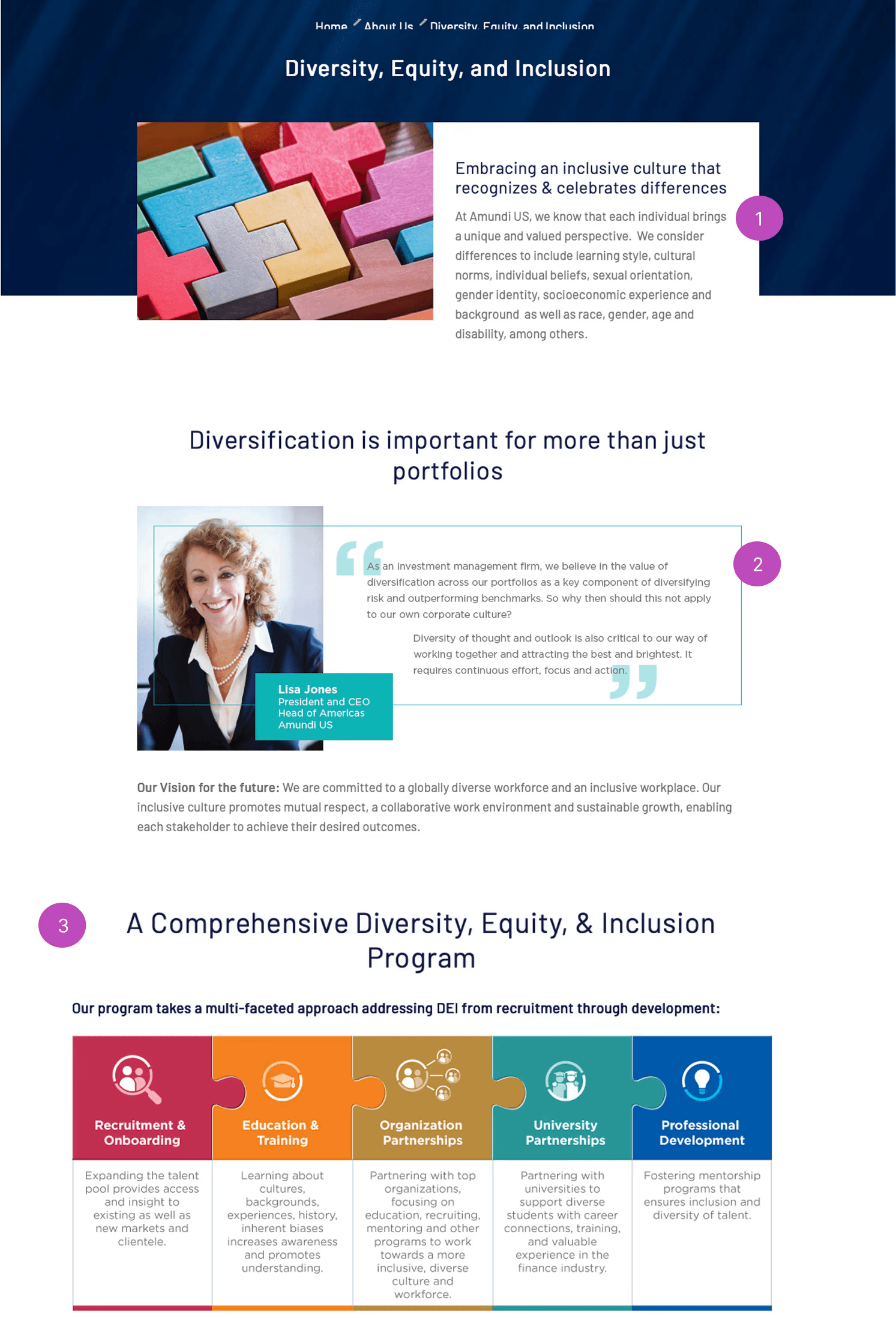
Worked with HR executives and senior leadership to align DEI messaging with organizational goals, recruitment priorities, and employee engagement initiatives.

Humanized the initiative through executive storytelling
Integrated leadership messaging into the experience to create a more credible and personal introduction to the DEI program.

Structured content around DEI program pillars
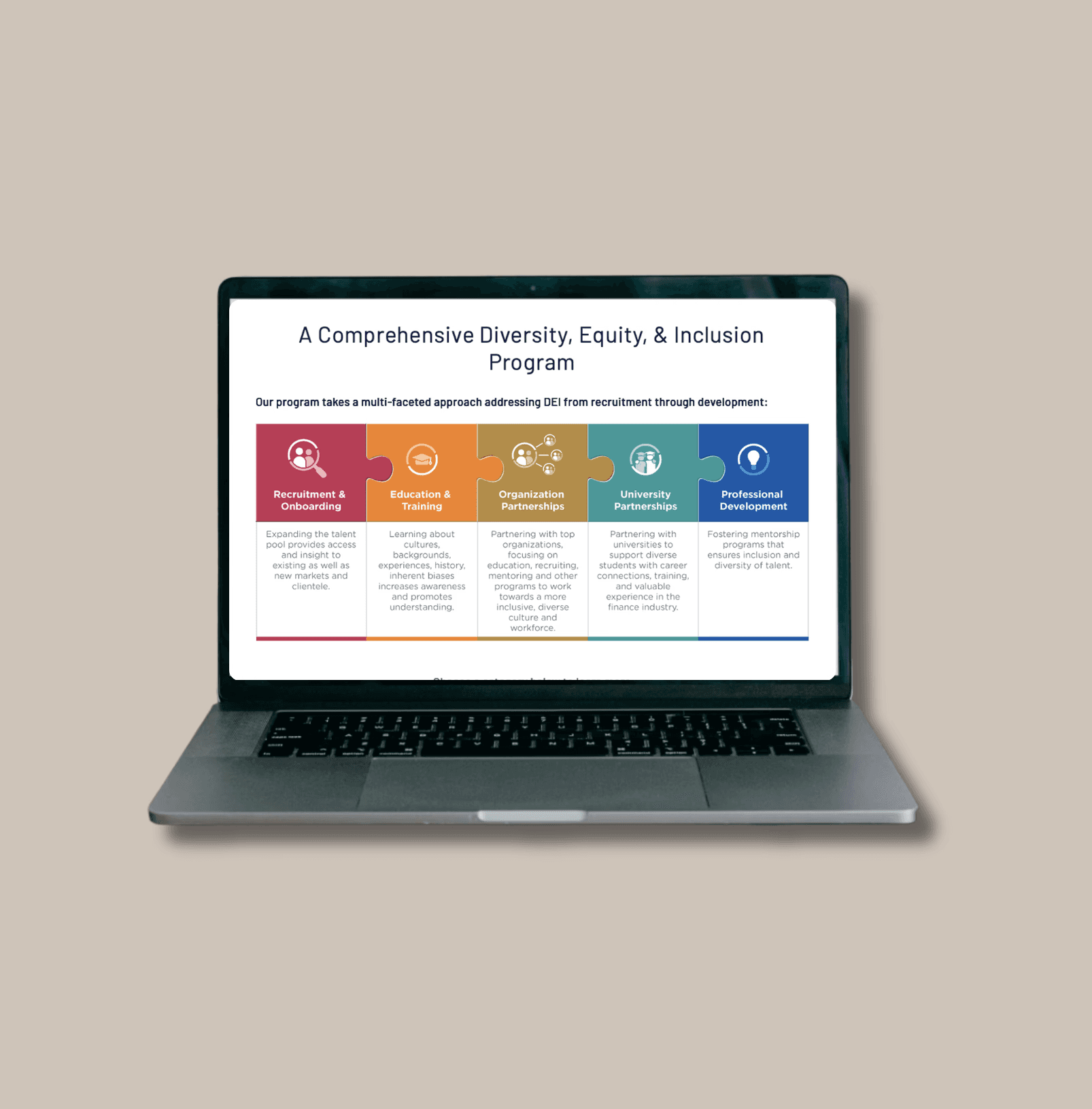
Translated a complex, multi-faceted DEI program into a visually structured system, making abstract concepts easier to understand and navigate
Supporting Design Decisions:
Use data to build credibility
Incorporated real HR demographic data to make the content more specific and trustworthy, avoiding vague or generic statements.
Create a scalable content model
Developed a flexible structure that could evolve with future updates, ensuring the page remained relevant as initiatives expanded.
USER FLOW EXAMPLE
User Navigation Model (DEI Program)
The page was designed to support non-linear navigation. A user lands on a visual overview of the five DEI pillars, then either scans for a high-level understanding or jumps directly to a specific pillar using anchored navigation. Each section works independently, so users can enter from any point without losing context.
OUTCOME
Transformed fragmented internal DEI materials into a unified, externally-facing content system
Enabled users to quickly understand the full scope of DEI initiatives and navigate directly to areas of interest
Organized complex and sensitive topics into clear sections that made the content easier to understand and navigate
Established a repeatable content model that supports future program expansion without redesign